Introduction: A Region on the Brink
US-Iran War 2026
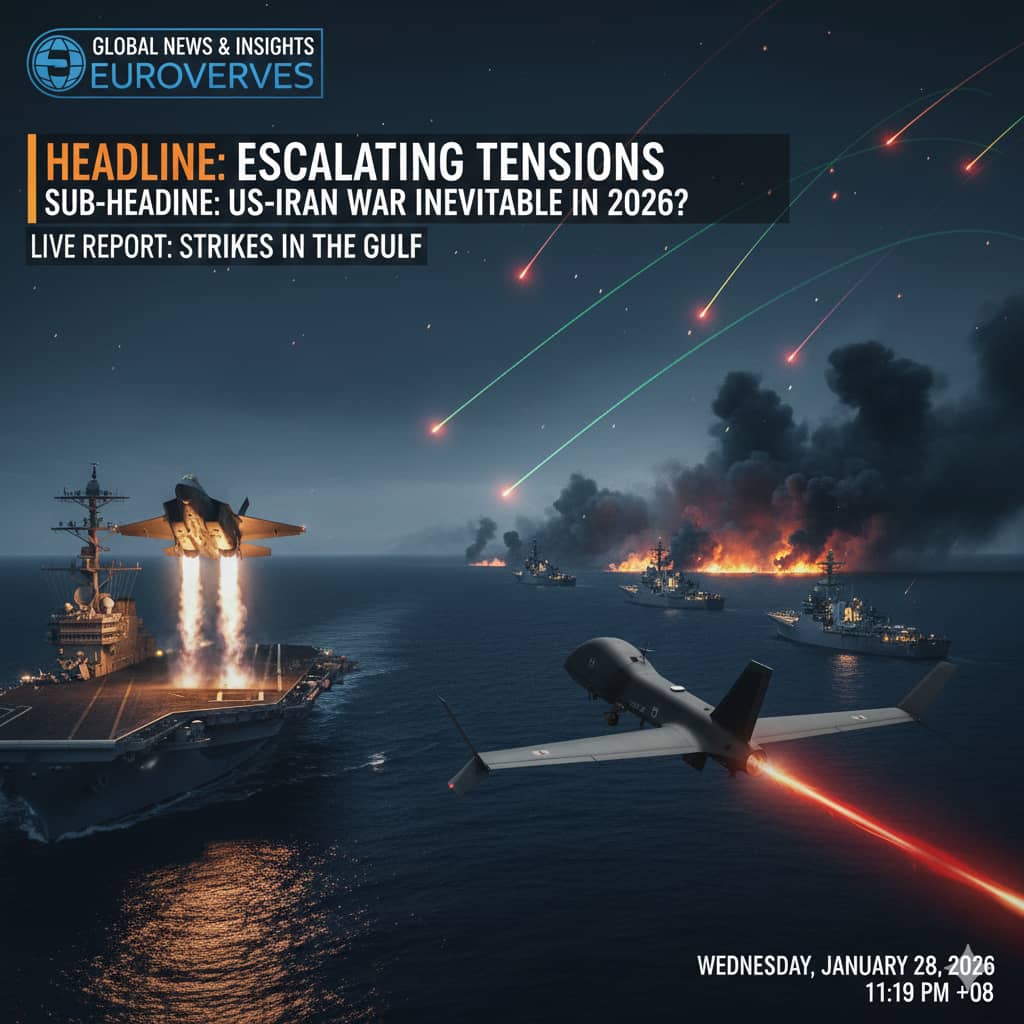
The geopolitical landscape of the Middle East is currently facing its most volatile moment in decades. As of early 2026, the diplomatic friction between Washington D.C. and Tehran has reached a boiling point. With failed nuclear negotiations and increasing naval skirmishes in the Strait of Hormuz, the international community is asking one critical question: Are the United States and Iran on the inevitable path to a full-scale military conflict?
The Catalyst: Nuclear Ambitions and Failed Diplomacy
The primary bone of contention remains Iran’s nuclear program. Following the total collapse of previous agreements, intelligence reports suggest that Tehran has achieved a level of uranium enrichment that places them weeks away from weaponization.
The U.S. administration, maintaining its “Red Line” policy, has made it clear that a nuclear-armed Iran is unacceptable. “All options, including military ones, are on the table,” stated the U.S. Secretary of Defense during a recent emergency summit. Iran, in response, maintains that its program is for peaceful energy purposes, though its refusal to allow international inspectors tells a different story.
Strategic Flashpoints: The Strait of Hormuz and Beyond
Any potential war would likely begin in the maritime corridors. The Strait of Hormuz, a narrow waterway through which 20% of the world’s oil passes, is Iran’s greatest strategic lever.
The Threat: Iran has repeatedly threatened to close the Strait if attacked, which would trigger a global energy crisis and send oil prices soaring past $200 per barrel.
The Response: The U.S. Fifth Fleet has increased its presence in the Persian Gulf, conducting joint exercises with regional allies to ensure “freedom of navigation.”
Trump Threatens Canada with 100% Tariffs Over China Ties –
US-Iran War 2026
Proxy Warfare: The Hidden Frontlines
A war between these two giants wouldn’t stay confined to their borders. Iran’s “Axis of Resistance”—which includes Hezbollah in Lebanon, various militias in Iraq and Syria, and the Houthis in Yemen—acts as a force multiplier.
Israel’s Role: As a key U.S. ally, Israel is directly within the range of Iranian missiles. Any strike by the U.S. would likely trigger a massive retaliatory response against Israeli cities, potentially drawing the entire region into a “forever war.”
Cyber Warfare: Experts warn that the first shots of this war have already been fired in the digital realm. Iran has ramped up cyberattacks on U.S. infrastructure, while the U.S. continues to target Iranian command-and-control systems with sophisticated malware.
Military Comparison: Asymmetric vs. Conventional Power
While the United States possesses the world’s most advanced military technology, including stealth bombers and carrier strike groups, Iran utilizes an “asymmetric” strategy.
Iranian Strengths: Vast swarms of low-cost suicide drones, advanced ballistic missile silos buried deep underground, and a geography that makes a ground invasion nearly impossible.
U.S. Strengths: Total air superiority, global logistics, and the ability to strike any target with precision from thousands of miles away.
The Economic Impact: A Global Recession?
The mere threat of war is already destabilizing global markets. Economists warn that a conflict in the Persian Gulf would:
Disrupt global supply chains already weakened by other conflicts.
Lead to a massive spike in shipping insurance rates.
Cause a significant drop in consumer confidence across the West and Asia.
The Role of Global Powers: China and Russia
A New Chapter as Europe’s Cultural Capitals for 2026 –
us war
Unlike previous Middle Eastern wars, the 2026 scenario involves a more complex web of alliances. China, which relies heavily on Iranian oil, has called for “maximum restraint.” Russia, currently aligned closely with Tehran through military trade, could provide intelligence or advanced air defense systems to Iran, further complicating any U.S. military strategy.
Conclusion: The Search for a De-escalation Path
Despite the rhetoric, a full-scale war is a scenario where there are no true winners. The human cost would be catastrophic, and the regional instability could last for generations. Diplomacy remains the only viable exit ramp, but as both sides dig in their heels, the window for a peaceful resolution is closing fast.